
Craft Heritage
Art, Craft & Handcraft
Human-to-human knowledge transfer is essential in every craft, handcraft and art form, whether it’s an artisan showing the hand-carving of a wooden bowl, a photographer teaching the soul of a moment, a musician passing on the feel of a phrase, a designer sharing the empathy behind a user interface. This transmission goes beyond technique. It carries intuition, emotion, and experience, the things no algorithm can truly grasp. Knowledge transfer shapes skill continuation through mentorship, shared practice, and the quiet wisdom passed between creators.
True art emerges not from imitation, but from lived experience. It’s rooted in human struggle, joy, and life experiences. Such values, AI can mimic but never authentically feel. It imitates but lacks the emotional depth, cultural context, and personal journey that make art meaningful. It can blur the line between creation and replication. Recognizing real art means valuing not just the final product, but the human story behind it. We must protect the irreplaceable: the human touch, the shared wisdom, and the emotional resonance that define true art. More than aesthetics, it’s about preserving what makes us human.
Handcraft knowledge continuation

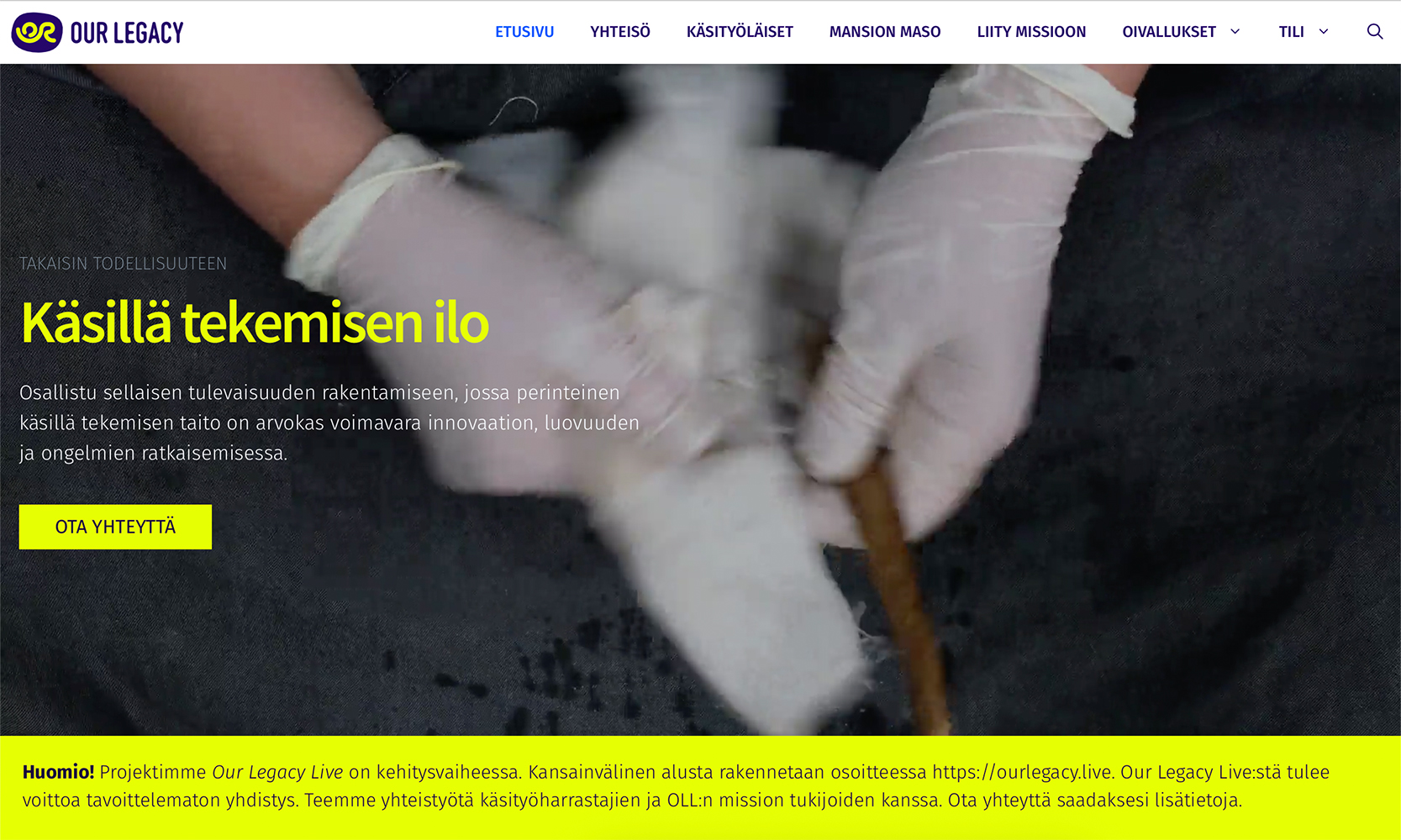
Project is part of a social movement that enquires into the future of hands-on skills and craft knowledge in a landscape of overpowering digital technologies.
The age-old handcraft knowledge that has been essential for human survival is being marginalized by modern technological developments. The relationship between mechanization and handcraft represents a fundamental tension in modern society, one that isn’t simply resolved by choosing one over the other. Both have distinct value, and the challenge lies in how to preserve craftsmanship while benefiting from mechanization.
Children have an intrinsic drive and interest to learn by doing. The educational systems that often align with modern mechanized methods and today’s digital service landscape deter the innate enthusiasm of building with hands. Newer generations are lacking encouragement and supportive eco-systems to learn handcraft and continue hands-on legacies.
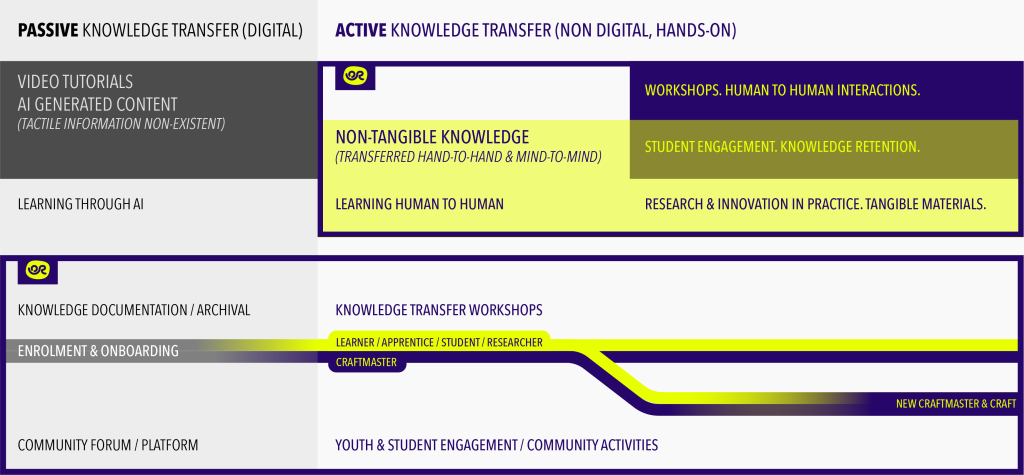
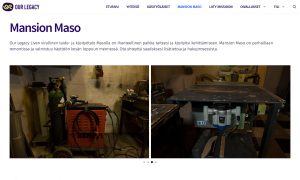
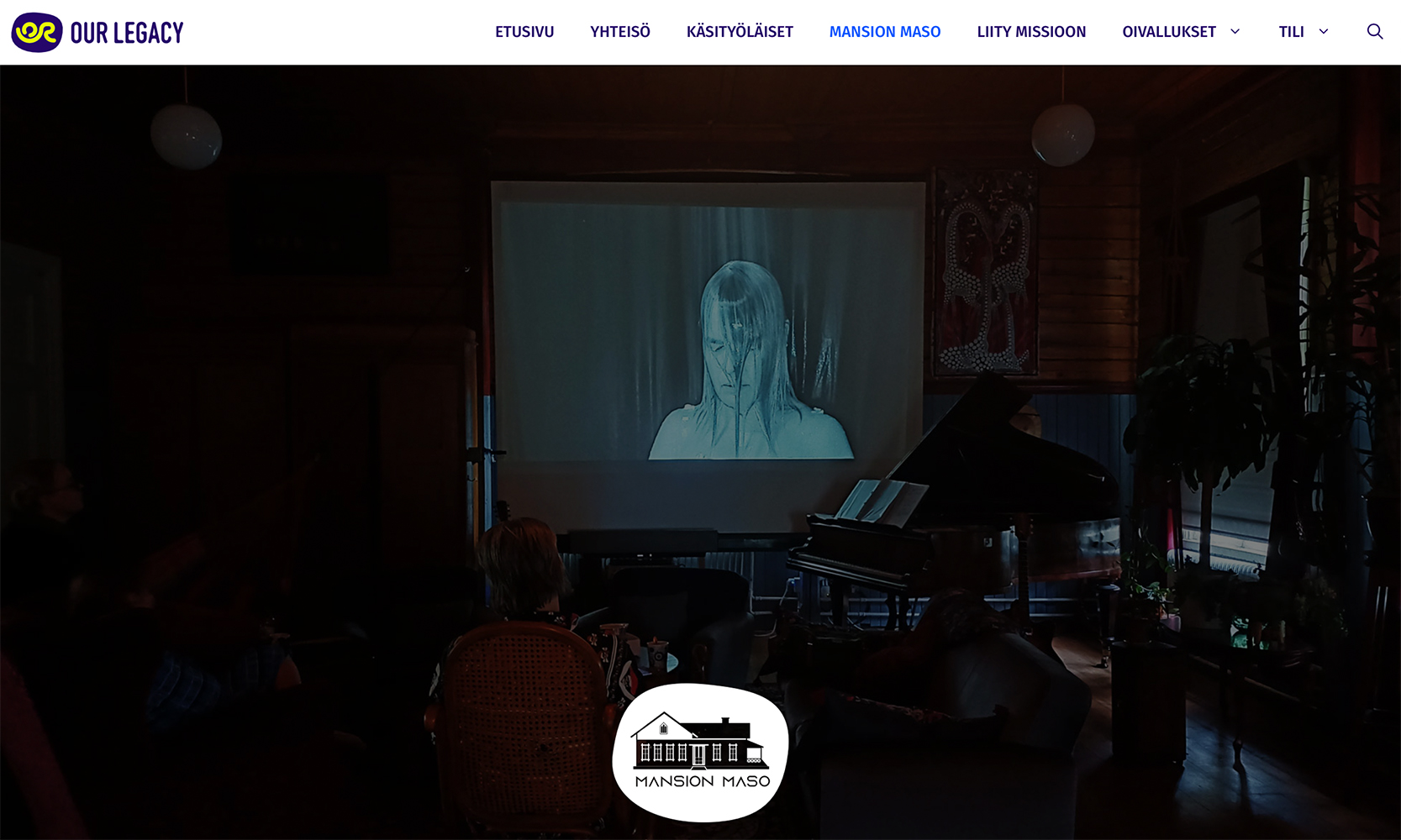
Project aims to preserve handcraft legacies through archival and human-to-human knowledge transfer, ensuring they remain a source of inspiration, and innovation for future generations. Our Legacy Live was designed using established design principles, methodologies and tools for global reach. Service Blueprint was used to define each role’s interactions in detail and required tools to support those interactions e.g. how could students discover their passion for working with a certain material and how they could reach out to someone who masters the craft of working with that material. Craft masters were engaged and venue partnership was established for conducting workshops on location e.g. Mansion Maso in Finland. Details on Design Process are available in my Design Portfolio.
Active knowledge transfer
Platform
Masters
Tuula Tantula-Murto
Material: Textile, Animal Fibre, Plant Fibre
The history of the national costume in Finland spans over 130 years. Tuula Tanttula-Murto has been an essential part of this history for 50 years.
Heli Hietala
Material: Animal bone, Metal
Heli combines the skills of carving, sculpting, painting, and metal techniques to create unique works of art. During her studies, she specialized in craft and metal art, but her creativity also extends to textiles and the use of axes and digging tools. Heli emphasizes the relaxing and therapeutic effect of handmade work—concrete, hands-on work is her way of escaping daily stress and experiencing sensory experiences, such as feeling the surface texture of materials.
Petro Veretilnyk
Material: Metal, Stone
Petro masters the craft of titanium jewellery and also makes sculptures with other metals and stones. His first verified exhibition was at Russian Centre of Science and Culture in Helsinki in 2014, and the most recent exhibition was at Cherkasy Art Museum in Cherkasy in 2021. He has also had exhibitions in Ukraine.
Soja Murto
Material: Textile, Animal Fibre, Plant Fibre
Soja is a national costume maker and an enthusiastic entrepreneur who grew up surrounded by the craft of national costumes. Her mother has been sewing national costumes for 50 years, and her father has woven fabrics for national costumes and crafted traditional footwear. She has been working as a national costume maker in her own business since 2001.